
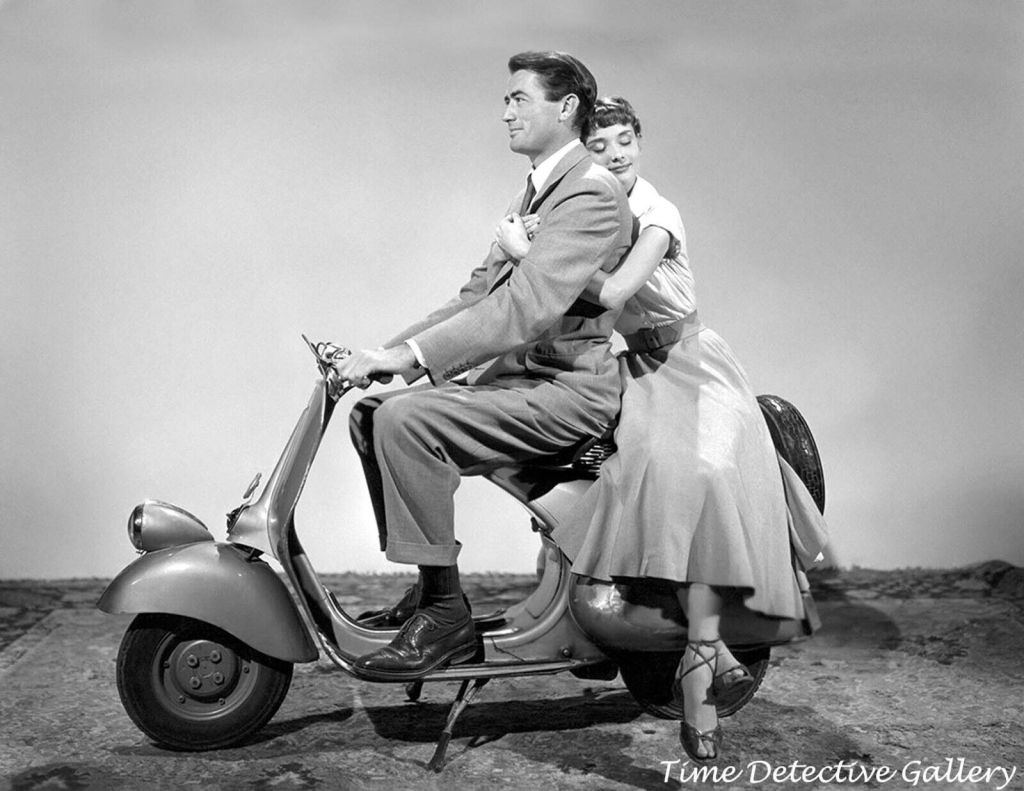
At the end of World War II, Italy was in a devastating state – widespread destruction, cities in ruins, damaged infrastructure and a mourning population struggling to put bread on the table.
The disturbing image of war-torn Italy eventually gave way to reconstruction and the normalization of life. By 1948, pre-war industrial production levels had been regained, and the Italian economy was once again rejuvenating. Italy’s prominent industries were now producing fashionable clothing, household electric appliances, furniture, and inexpensive small cars.
Inexpensive small cars – you read that right. Among them, Piaggio’s Vespa, the functional, stylish scooter that would later become a symbol of Italian culture.
Enrico Piaggio, the second son of the Piaggio family, joined the business at the age of 22, overseeing the aeronautics division. At the dawn of World War II, Piaggio’s thriving business was partly the result of the surging demand for military aircraft.
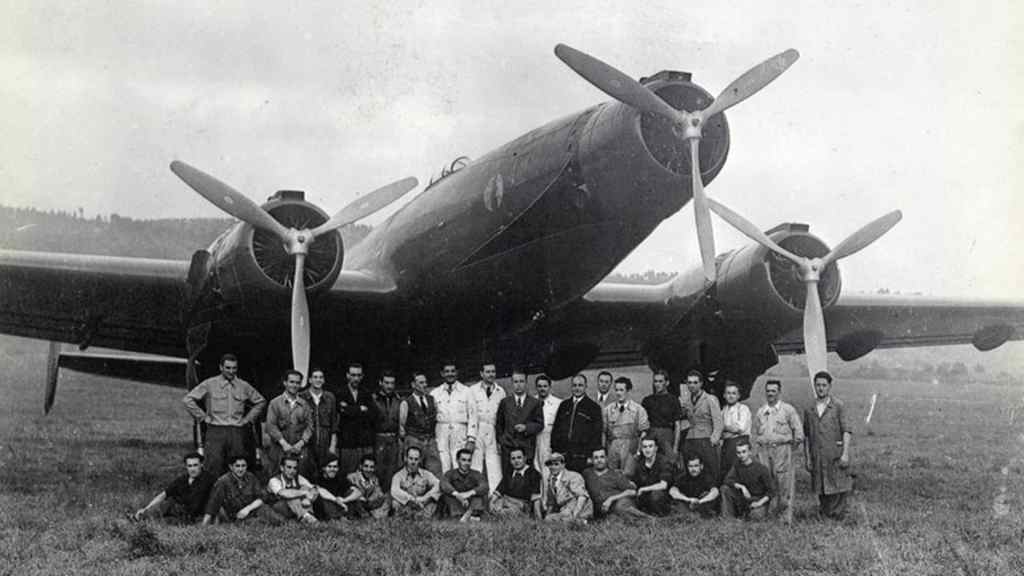
As the war came to an end, the company’s premises in Pisa were bombed, bringing much of the business to a halt. The changing times forced the company to adapt to the needs of a country where ordinary people needed an affordable way to travel faster than by bicycle, but without the costs of a car.
The first attempt to build such a vehicle is a scooter designed by Renzo Spolti. However, the prototype, nicknamed “Paperino”, was highly inconvenient, and required further work on the design.
It was Corradino D’Ascanio, the brilliant engineer at Piaggio, who reimagined the design and developed the MP6 prototype in 1945. A year later, the company commenced production of the two-wheeler that would make history – the Vespa 98.
The Vespa was built to tackle the challenges posed by post-war realities. It featured innovations like an enclosed engine to protect riders from grease and dirt, making it a cleaner and more convenient alternative to motorcycles.
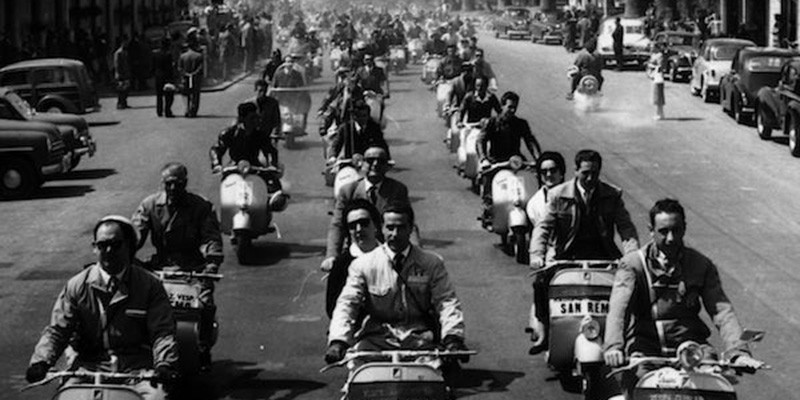
Moreover, the design allowed easy access for women and priests, who were often constrained by skirts and cassocks. The Vespa offered functional mobility, with many photos from the early 1950s depicting entire families riding on the first scooters.
What brought the new scooter its worldwide fame, however, was the American romantic comedy film Roman Holiday (1953), starring Audrey Hepburn and Gregory Peck.
The iconic scene of Hepburn riding a Vespa transformed the scooter from merely a mode of transportation into a symbol of Italian culture and fashion. The film became a “commercial” for Vespa, with later films like An American in Paris (1951) and The Talented Mr. Ripley (1999) continuing Vespa’s cinematic legacy.
Sources: Britannica, Famiglia Cristiana, Piaggio, La Vespa Mania



 The Fellow's Table
Leave a comment