
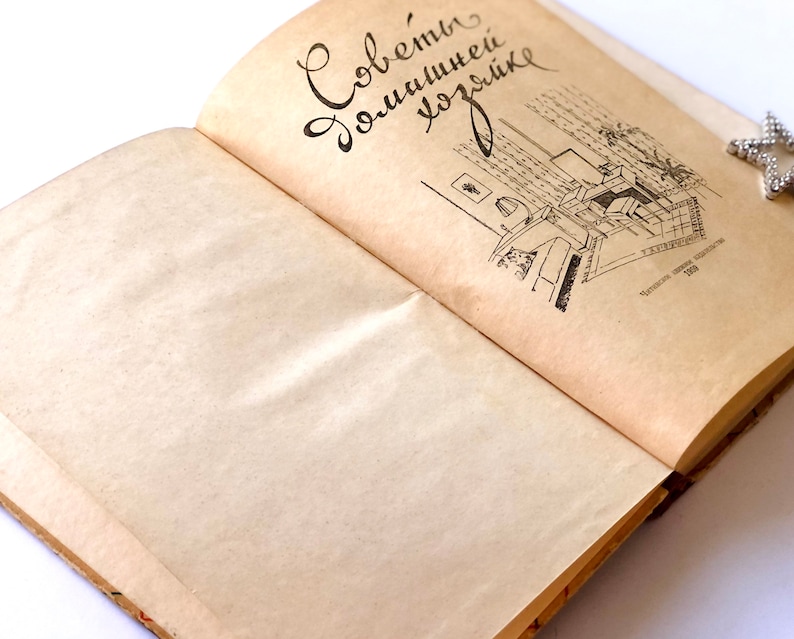
Mother had one or two of those—probably we still have them somewhere in a drawer or cupboard, unless they’ve been thrown away. Her sisters had them too. In the Soviet Union, every woman owned a copy of those know-it-all housekeeping books. They were especially popular for two things: recipes and knitting patterns—a hobby embraced by many young wives at that time.
You might be surprised to learn that the Soviet Union was among the first lands to grant women economic and educational opportunities. The Bolshevik policy started with a radical liberal vision of individual freedom and women’s rights. The Constitution of 1918 secured political and civil equality, removing the legal restrictions that kept women at a low rung on the status ladder.
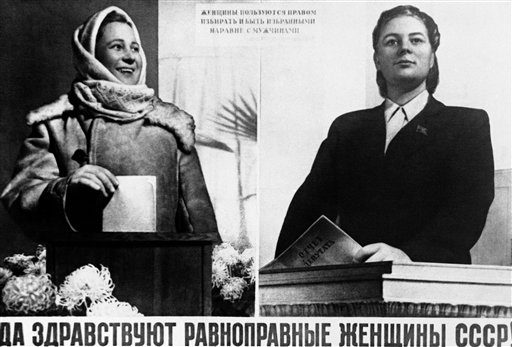
The number of women pursuing higher education grew steadily. By 1935, an impressive 38% of Soviet women were enrolled in higher education institutions—a proportion much higher than in Germany or England at the time. Soon, women were participating in the most complex and responsible professions.
By 1959, there were 20 million more women than men, a sobering statistic that reflected the heavy losses of war. Half of the workers in mechanical and electrical engineering were women. Women also accounted for 64% of drivers, 70% of tower crane operators and 42% of locomotive engineers (Schuster, 1971).
Despite women taking on roles traditionally held by men in the labor force, housekeeping remained their primary responsibility. With the rapid pace of urbanization, the authorities introduced several initiatives to improve the quality of life and integrate traditional practices into the socialist framework of the time. Women were at the centerpiece of this initiative.
This brings us back to the housekeeping books, which emerged as ‘essential’ guides for homemakers. They offered advice on cooking, sewing, hygiene, and home management. The publication of these manuals surged during the late 1950s and early 1960s.
The manual I found is titled Домашняя всезнайка, which translates to The Know-It-All Homemaker. It was published in 1973. From the foreword, the intention is made clear: “The goal of our book is to equip the hardworking woman with practical advice to assist her in managing household tasks effectively.”
The further I go, the more interesting it gets. Take, for instance, this piece of advice:
“An experienced homemaker, while preparing lunch today, is already thinking about tomorrow’s menu. For instance, if today’s meat patties are served with a rice side dish, enough rice can be cooked to make a rice pudding for tomorrow’s lunch. Or, if meat-stuffed pancakes are baked today, tomorrow’s plan might include pancakes with cottage cheese.”
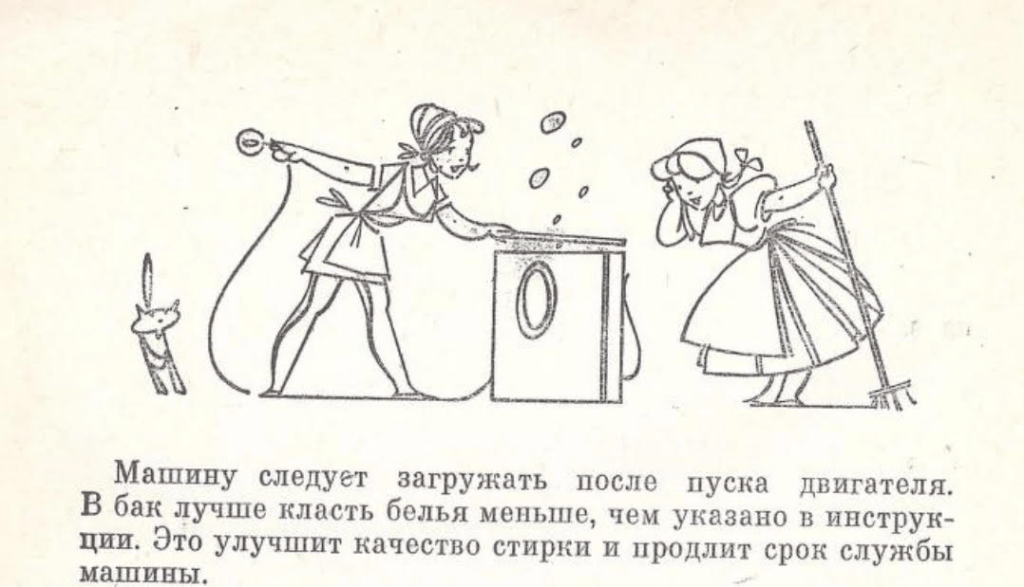
Divided into eight chapters, the practical advice covers topics such as how to furnish an apartment, how to remove stains, how to iron clothes without leaving holes, cooking recipes, yoga positions, and even jokes. I will leave some of them with you. My husband found them odd and said he can’t understand this sense of humour.
STILL TO COME
A wife reports to the police that her husband hasn’t come home for three days.
The officer asks: “Does your husband have any distinctive features?”
The wife replies: “Not yet. But he will when he comes home.”
DIVISION OF LABOR
Pistike visited his sick mother in the hospital.
– “How are you managing at home with Dad?”
– “Everything’s fine. We divided the chores. He washes the dishes, and I sweep up the broken pieces.”
GOOD MEMORY
Judge: “When did the problems between you and your wife begin?”
Husband: “May 20th, 1988.”
Judge: “How can you be so precise?”
Husband: “That’s the day our marriage was registered.”
A BIG SELECTION
The young husband asks his wife:
– “Which pants should I wear, the ones that are not ironed or the ones without buttons?”
Image credits: BookLandUA




 The Fellow's Table
Leave a comment