
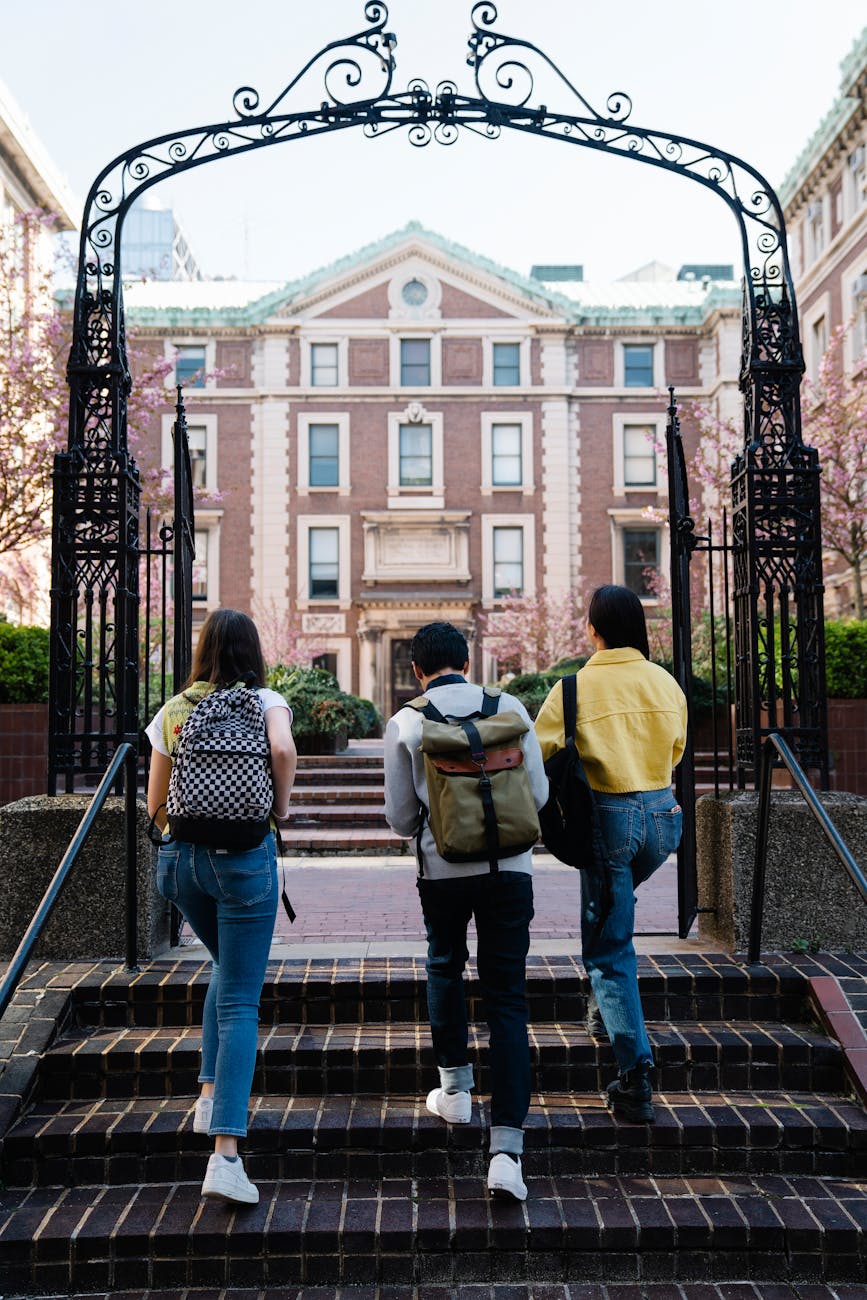
January 24 is the date the United Nations General Assembly proclaimed as the International Day of Education. Each year, on this date, we are reminded that education is a human right, a public good, and a shared responsibility that has the power to transform communities affected by poverty.
Since we spend a significant portion of our youth in classrooms and lecture halls, it is clear that some of our memories and friendships originate there. Therefore I couldn’t help but reflect on some of the professors who left a lasting impression on me as a student.
After graduation, I wasn’t sure which path to take in my career. For some reason, international economics appealed to me as both a challenge and a gateway to potential opportunities. I remember my first year as being terribly difficult yet beautiful. For the first time, I was away from my family and fully responsible for my independence.
My memory exercise has been both rewarding and heartwarming because I believe the people we meet during those formative years of freedom teach us invaluable life lessons that stay with us for a long time.
I encourage you, too, to take a moment to reflect on the professors who made a lasting impression on you during your studies.
Professor P., Econometrics:
Professor P. taught one of the most challenging disciplines in the field of economics—econometrics. Despite his venerable age, he maintained a gentle and kind attitude toward students, even those for whom econometrics felt like reinventing the wheel.
Professor B., Mathematical Economics:
This gentleman remains in my memory as an eccentric, mysterious figure, seemingly from another world. I had him as a professor in my first year of university when he taught one of the core economics subjects—mathematics.
His lectures were always packed because missing even one class meant falling hopelessly behind. He had a tendency to fill the five-meter-long blackboard with calculations and would even write on the wall if there was chalk left.
I often saw him in the media library, busy editing his mathematical economics textbook. He seemed lost in another world, and everything around him vanished like vague steam.
Professor Z., International Business:
This lady embodies the traits of a true researcher. Tall, with short, wavy chestnut hair, a long face, thin lips, high cheekbones, and intelligent eyes, Professor Z. stands out as a critical thinker with a sharp mind and a broad range of knowledge.
I recall a humorous situation: during one seminar, none of my classmates had prepared. To salvage the situation, I mustered my courage and asked Professor Z. a question I knew would keep her engaged for the entire class—something about China’s economic development.
Things unfolded just as I had anticipated. Although she realized what I was up to, she remained on good terms with me. Later, I even gave her a book of articles from the Harvard Business Review, knowing she’d find it far more useful than I would.
Professor Tz., Economic Diplomacy:
In my master’s program, I had the chance to meet extraordinary people with vast experience in the subjects they taught. However, none could match the expertise of Professor Tz., who was 75 years old when he taught us.
He had been the first Minister of Foreign Affairs of the Republic of Moldova and later served as ambassador to the U.S., Canada, and Mexico. During one class, we had a heated debate with him about war reparations to Poland after World War II.
He always encouraged us to ask questions, and we discussed a wide range of international affairs.
Professor M., World Economy:
This is the woman who inspired—and continues to inspire—groups of students. From her, I learned the importance of focusing on current events, relevant information, and verified statistical data. She also embodied beauty and grace through her elegant, French-styled attire.
Our last interaction was during the defense of my annual project when I was, unfortunately, experiencing burnout—the result of sleepless nights, endless work, long commutes, and exams. I received the highest grade for my presentation, though she remarked that she had expected more from me. I replied that things could have been different if not for my job—a remark she found rather bold coming from me.
Image credits: George Pak




 The Fellow's Table
Leave a comment