

One year ago, when my partner and I chose Lithuania as the next destination for our education and professional training, we wished we had double-checked the information about the country—and perhaps made a better decision.
Lithuania contrasts greatly with where we settled previously—Germany. I recall a funny situation when we visited the Christmas market in Vilnius’ Old Town on a Friday evening. Being in the capital of Lithuania, we expected large crowds, music, and plenty of activities. Last year, while visiting one of the many German Christmas markets, we had to shout at each other to be heard over the loud music.
To our surprise, the Lithuanian Christmas market was quiet, almost empty, with just a few families here and there. The few huts spread in a circle around the Christmas tree were selling… socks and pillows. And of course, there was hot wine, caramelized apples, and sweets. Half an hour later, we were already on the bus back to our apartment.
What affected us the most in Lithuania was the moody weather. I can count on my fingers how many times we saw the sun in the past five months. This, along with other experiences, shaped our time living in Vilnius. I wanted to share some information you should know before deciding on Lithuania as a destination.
1. Winter days are shorter compared to those in other European countries.
In winter, the sun rises around 9 a.m. and sets at almost 3 p.m. This is a one-hour difference compared to Germany, and while it may not seem substantial, our bodies don’t need more than that to feel uncomfortable.
2. The sale of alcohol is restricted.
Introduced in 2018, Lithuania’s alcohol restrictions have contributed to a decrease in male mortality rates and alcohol consumption among the youth. Supermarkets are allowed to sell alcohol from 10 a.m. to 8 p.m. on Mondays through Saturdays and from 10 a.m. to 3 p.m. on Sundays.
Drinking in public is considered disrespectful and obnoxious—even if it’s non-alcoholic beer.
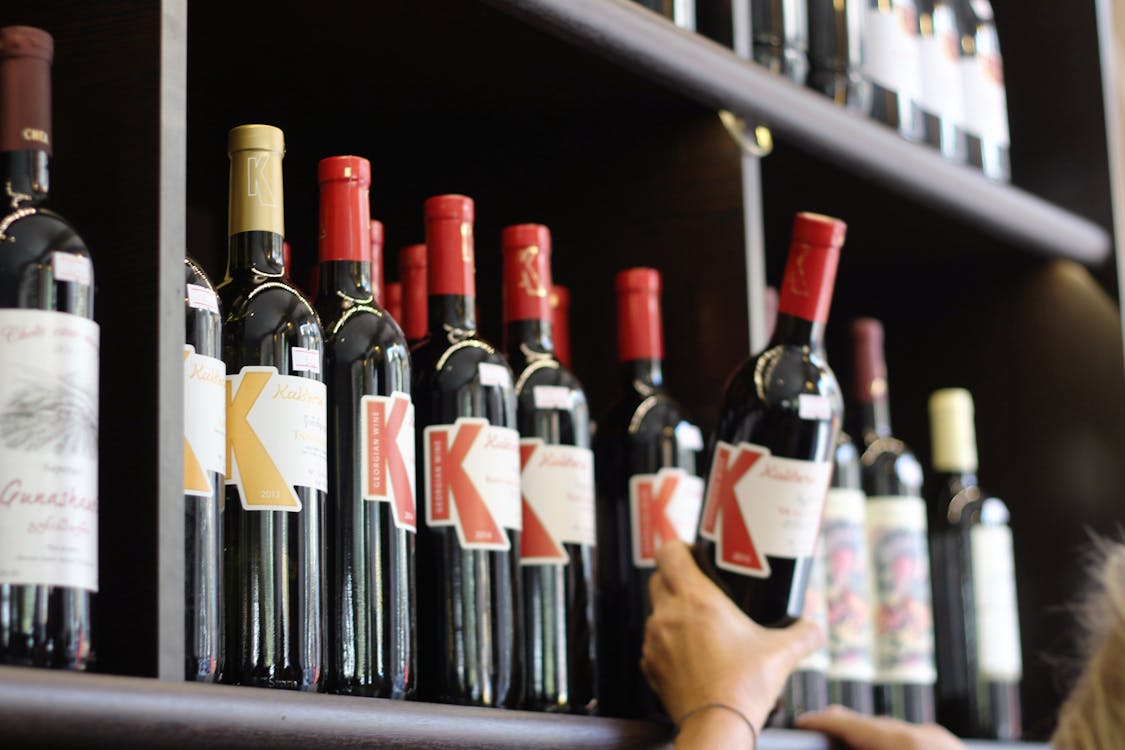
3. Grocery shopping is more expensive than in Germany, but of better quality.
Shortly after moving to Lithuania, we were shocked to learn that the minimum wage here is €777 after taxes. This would already be a challenge under normal circumstances, but the high rental and grocery prices make it difficult to imagine how people manage.
That said, groceries in Lithuania are of better quality—more natural, let’s say—and the variety of products is impressive. Items like cottage cheese, kefir, bubliki, dumplings, meat products, fresh, tinned, and marinated fish, caviar, and pickles are widely available, whereas they are harder to find in Western Europe.
Unfortunately, grocery prices in Lithuania are higher than in Poland, Germany, or Italy, putting a strain on your budget.
4. Vilnius offers a next-level shopping experience.
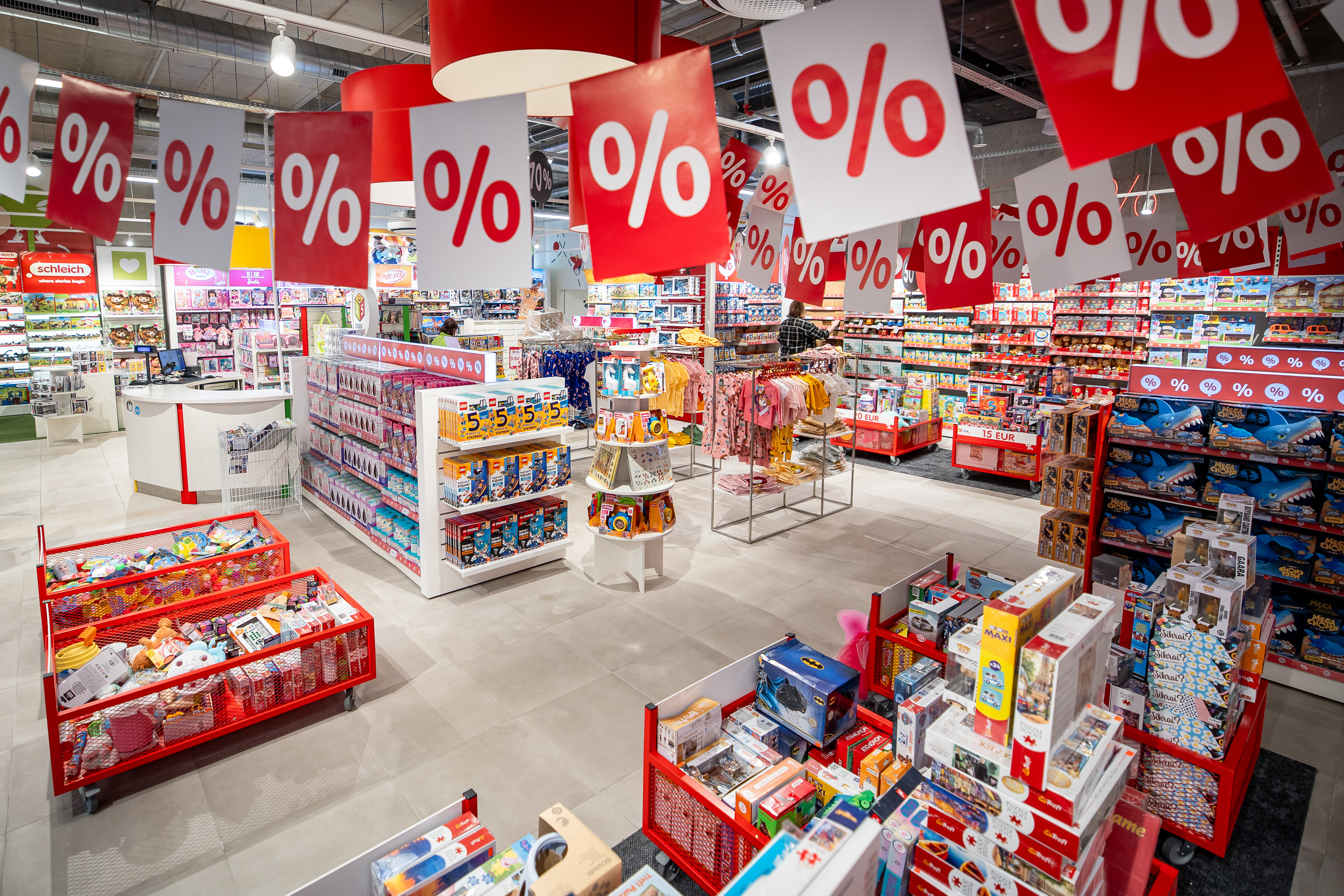
With plenty of higher education institutions and job opportunities, especially in IT, Vilnius attracts many young professionals eager for shopping sprees. Fun fact—Central and Eastern Europe have a higher density of shopping centers in their cities compared to Western Europe. This is due to smaller city sizes and lower population densities.
Interestingly, while many Europeans travel to Rome or Milan for shopping, Vilnius offers a similar experience at a lower cost. For example, there’s an entire shopping mall in Vilnius dedicated to outlet stores.
5. Lithuanian does not resemble any other known language.
If you think Lithuanian resembles Slavic languages, you couldn’t be more wrong. Lithuanian is an ancient language, considered by linguists to be the oldest surviving Indo-European language. In fact, it retains many archaic features that are comparable to Sanskrit, a classical Indian language.
Lithuanian belongs to the Baltic language family, of which only two survive today—Lithuanian and Latvian. Other Baltic languages like Old Prussian, Yotvingian, and Galindian have disappeared.
6. Lithuania’s currency is the Euro.
In 2004, Lithuania joined the European Union as part of the largest EU expansion to date. It adopted the euro on January 1, 2015, becoming the last of the three Baltic States to do so, after Estonia (2011) and Latvia (2014).
7. Many services are digitized.
Most public services in Lithuania are available online. In 2024, the digitalization level of key public services reached 84% for citizens and 94% for businesses (compared to the EU average of 77% and 84%, respectively).
Lithuania also legally recognized eSignatures as early as 2000, alongside Estonia, another leader in digitalization. Moreover, Lithuania ranks 12th in Europe for mobile internet speeds, with an average download speed of 84.6 Mbps.
8. Finding accommodation, especially as a foreigner, can be challenging.
Not many Lithuanians speak English, and even fewer landlords are open to renting to foreigners. This became clear when we were apartment hunting and encountered several listings that explicitly stated, “only for Lithuanians.”
Since Russia’s full-scale invasion of Ukraine in 2022, rental prices have skyrocketed, making it nearly impossible to find affordable housing. Rental costs in Vilnius now rival those in Düsseldorf and Munich.
9. If you enjoy travelling, Lithuania serves as a key connecting point.
Unfortunately, Lithuania hasn’t fully realized its tourism potential. While there are almost no cheap flights to Lithuania, once here, it serves as a convenient base for exploring other Baltic states—Latvia and Estonia—as well as Northern Europe.
In general, Lithuania offers limited tourist attractions, but from here, you can easily travel to Riga, Tallinn, Helsinki, or Stockholm.
10. Lithuania is NATO’s eastern border, and since the Russian invasion of Ukraine, it has been investing heavily in defense.
Since Russia’s 2022 invasion of Ukraine, Lithuania has significantly increased defense spending to strengthen its military and national security.
Local news often highlights the risks Lithuania faces, with an understanding that if Ukraine fails, Lithuania could be next. The government is building a new military base in Rūdninkai, 30 km from Vilnius, which will host 5,000 German soldiers by 2027. Additionally, €12 million is being spent this year to expand Vilnius’ shelters, aiming to double the city’s underground capacity.
Lithuanians take the threat of a future Russian invasion very seriously. Keep in mind that Lithuania’s independence was taken by the Soviet Union in 1940, and it was the first USSR member to demand national independence during its collapse.
Russia’s hybrid war against Europe affects Lithuania directly. For example, GPS jamming—a dangerous interference with pilots’ communication systems—has endangered flights to and from Lithuania. On January 16, a passenger plane failed to land at Vilnius Airport due to GPS interference. Read the full story here.

Image credits: Dmytro Kormylets, Rana M, Vilnius outlet, Alfo Medeiros



 The Fellow's Table

Leave a comment