
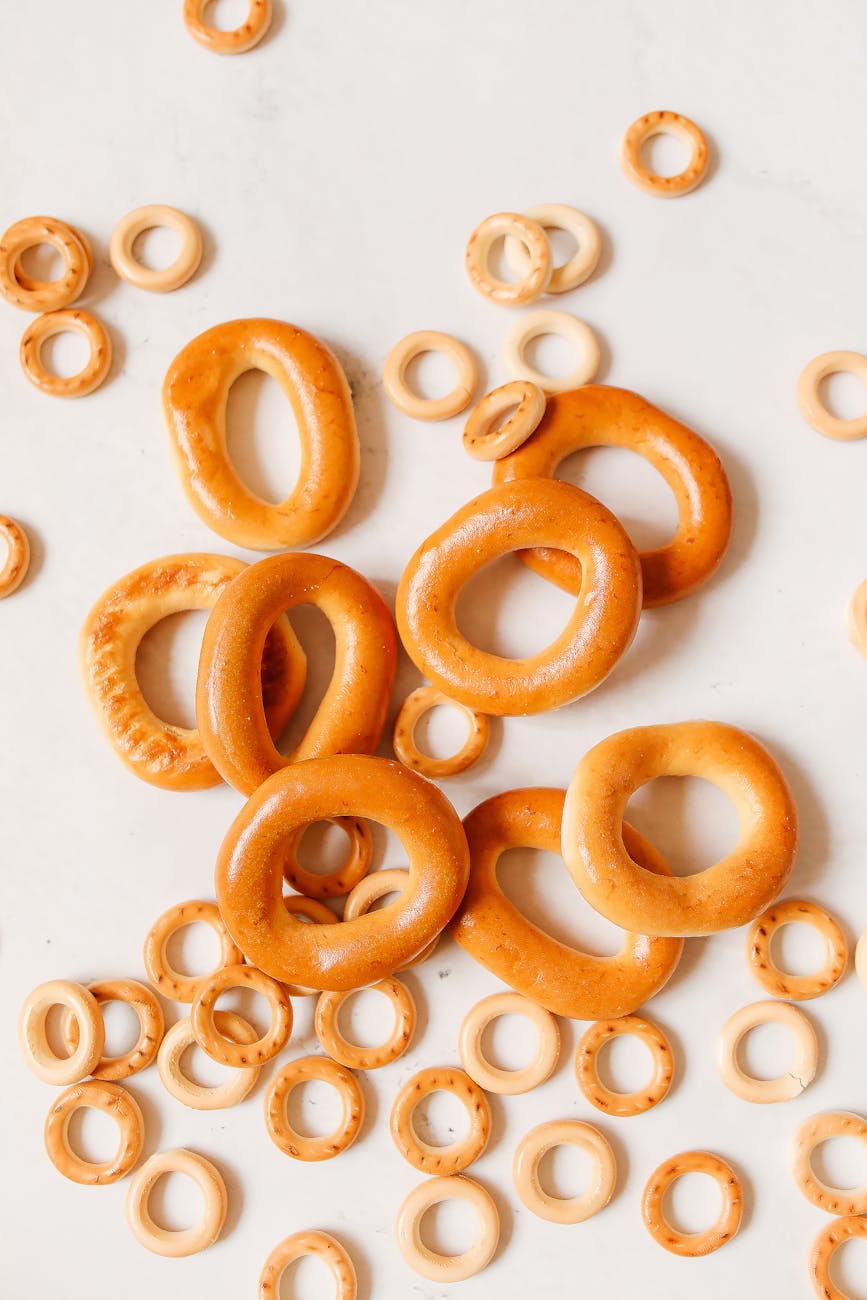
For most East Europeans, sushki, baranki, and other types of bread rolls are familiar treats. In winter, children would receive tons of them at Christmas as rewards for singing carols, take them to school as snacks, and families would often enjoy them at breakfast or at an evening tea.
Cheaper than almost any other food, sushki resonate with poverty in my mind, partly because, as a student, I struggled to make ends meet on a 40 EUR monthly scholarship and tried to save money wherever possible. Either plain, with poppy seeds, or sugar-glazed, the tiny treats spark long-lived memories in the minds of many children of the 2000s.
Interestingly, this widespread Eastern European pastry is linked to tea culture and was once restricted only to affluent people that could afford it. The ring-shaped pastries come in different sizes and textures, just like their origins.
Sushki
Sushka is a small, hard, and crunchy bread ring—the most popular of its kind. Its name comes from the Russian verb сушить (“to dry”). At bazaars, sushki are often displayed strung on a thread, adding to the product’s uniqueness.
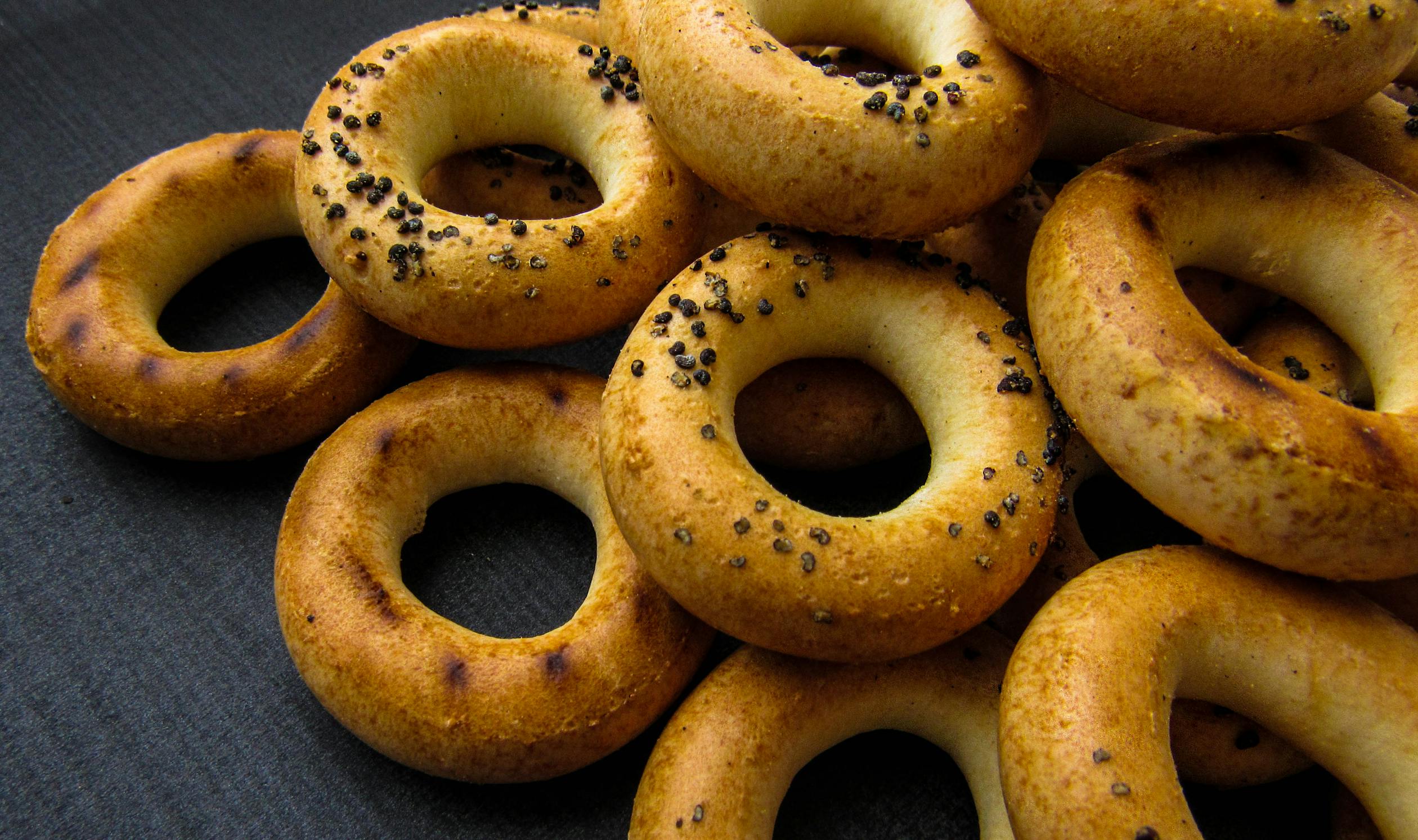
Baranki
Baranki originated in Belarus and later spread throughout Russia and other former Soviet countries. The dough was first boiled and then twisted into bundles before baking. They got their name because their shape resembled a ram’s horn.

Bubliki
Like bagels, bubliki were first made by Eastern European Jews. When they emigrated to America, they brought the recipe with them, helping to popularize these pastries in major cities. In the past, bubliki were also called “Odessa” due to their Jewish origins. Curious fact—the best bagels are not from New York, but from Vilnius.

Image credits: Polina Tankilevitch, Serghey Meshkov, Engin Akyurt





 The Fellow's Table
Leave a comment