
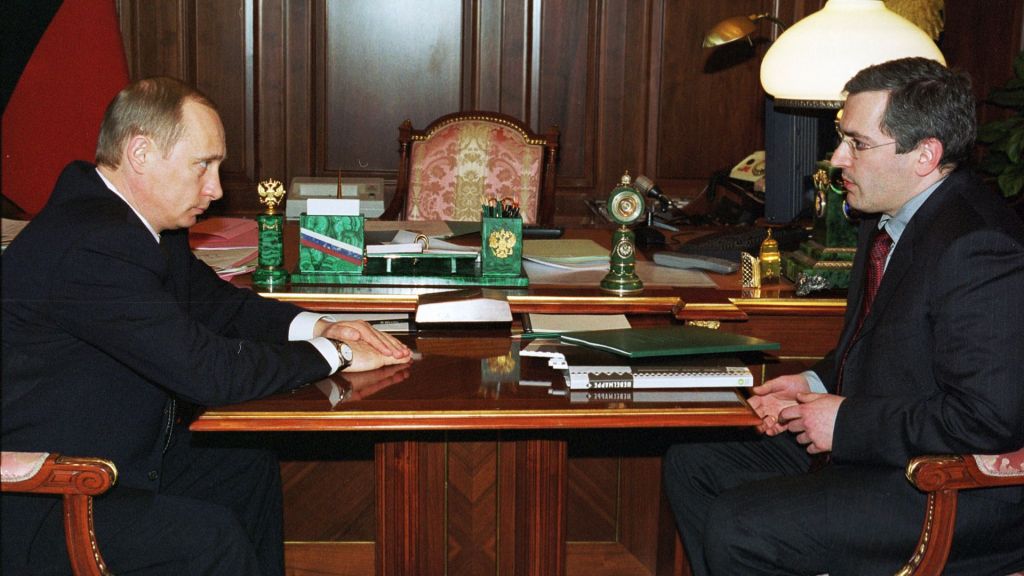
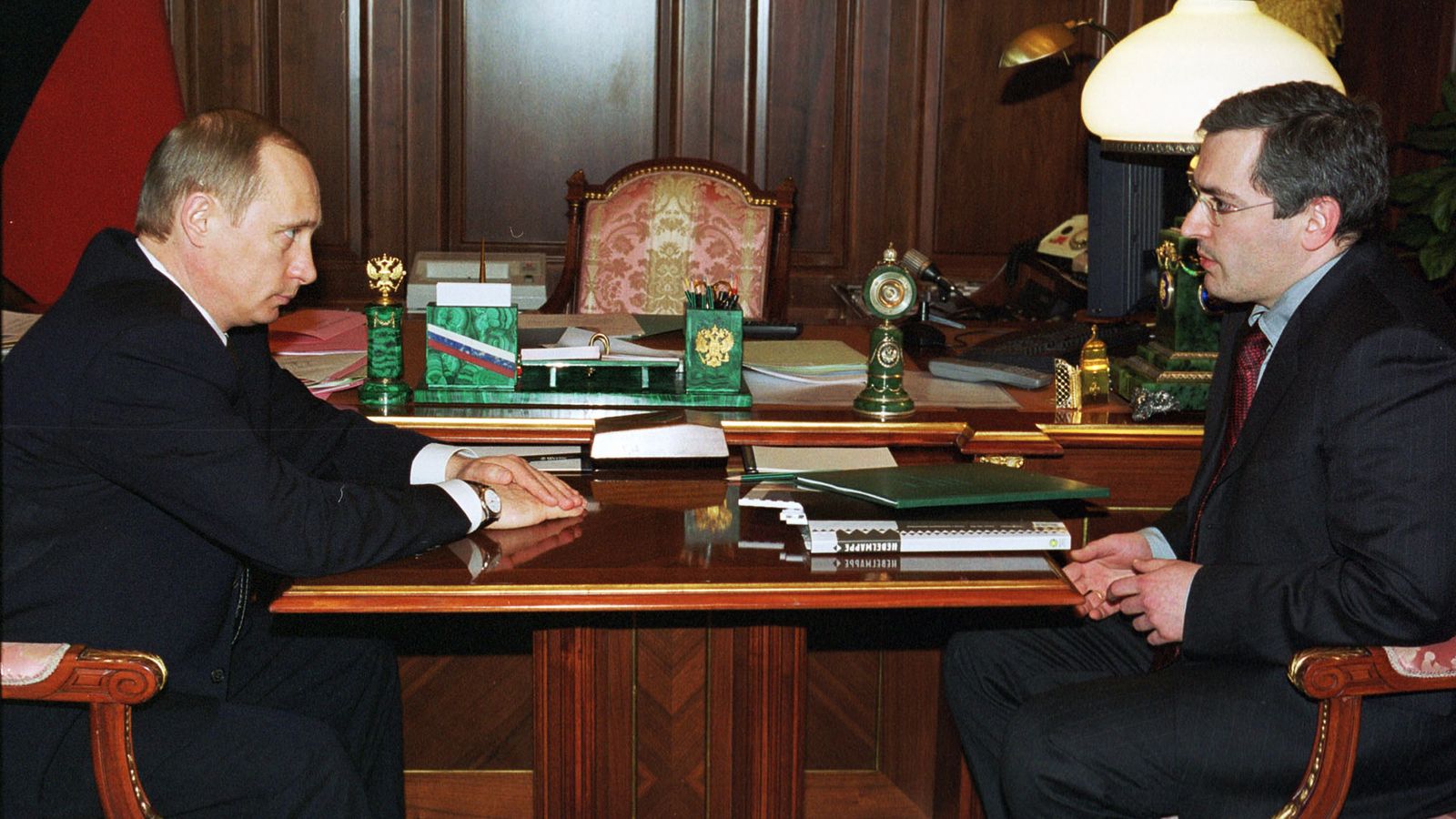
For anyone unfamiliar with the name Mikhail Khodorkovsky, he was once a multi-billionaire and one of Russia’s leading industrialists in the oil sector. Shortly after publicly confronting Vladimir Putin in 2003 over high-level corruption in the oil industry, Khodorkovsky’s company, Yukos—then Russia’s second-largest oil producer—was seized and later dismantled by the government.
Later that year, he was arrested by Russian security forces and imprisoned for ten years, finally being released in December 2013, just before the Sochi Winter Olympics.
Khodorkovsky left Russia with no hope of returning, as he risked a life sentence if he did. However, the once-richest man in Russia took with him into exile his knowledge of the Kremlin’s modus operandi—one he was determined to share with the world.
His book, The Russia Conundrum, is a must-read for anyone seeking to understand modern-day Russia and the motivations behind Putin’s bloody invasion of Ukraine.
From the outset, Khodorkovsky explains that the shock therapy applied during Russia’s transition to a market economy was poorly managed, paving the way for the KGB (now FSB) to seize power:
“But it was 1999 that produced the biggest surprise. The millions of viewers switching on their TV sets at midnight, expecting to see the familiar red-nosed, puffy-cheeked face of Boris Yeltsin, champagne glass in hand, were in for a shock. In his place, a small, unfamiliar man in an ill-fitting suit was sitting in front of a decorated Christmas tree, trying to look presidential.”
At first, Vladimir Putin—then acting president of the Russian Federation—seemed willing to embrace a liberal economic approach, or at least he made promises to do so. However, for Khodorkovsky and many others, his true intentions became clear as the country’s economy fell into the hands of his inner circle.
Khodorkovsky sees Russia’s return to authoritarianism as a direct consequence of the chaos of the 1990s, when the newly independent state struggled to transition to an open-market economy. In a moment of weakness, political power was simply handed over to the secret intelligence services, with no real opposition.
In his book, Khodorkovsky criticizes Western countries for their soft approach toward Putin, arguing that his regime uses so-called peace talks as a deception—buying time to regroup before launching further aggression:
“Russian authoritarianism will always be belligerent and aggressive. Its modus operandi will always be messianism, militarism and adventurism. It has no possibility of internal stability; it can be stable only when it is thrusting aggressively outwards. (…) Like all authoritarian regimes, Putin’s answer (to Russia’s internal problems) is even more foreign aggression, to keep Europe always on the defensive, and – following the invasion of Ukraine – on the brink of war.”
Regarding the war in Ukraine, Khodorkovsky highlights the Kremlin’s massive miscalculation in trying to conquer its neighbor. When the blitzkrieg failed, and Kyiv did not fall within three days, as the “man in his bunker” had expected, the Russian army resorted to war crimes—names like Bucha, Kharkiv, and Mariupol now serving as symbols of their brutality:
“[Putin’s] murderous adventure in Ukraine has been a catastrophic blunder (…) He underestimated both Ukraine’s ability to defend itself and the international response. He overestimated the capabilities of his own forces, critically weakened by years of corruption; he misjudged the crippling impact of autocratic rule on the quality of information provided to him; and he underestimated the exodus of skilled Russians his mobilisation would provoke.”
Khodorkovsky also discusses the fate of the exiled opposition and those who have fallen victim to poisoning, assassinations, or fatal “accidents” for daring to expose the regime’s corruption. He urges readers to distinguish between Russia as a country and the Kremlin’s ruling elite, emphasizing that Putin’s Russia does not represent the aspirations of its people:
“I was close enough to Vladimir Putin to discover how he thinks and to intuit the psychology of the man, to understand what his goals are for Russia and for himself. (…) fewer had the chance to say to his face everything they think about the corruption that exists right at the very top. (…) Speaking truth to power — and doing so publicly — led to my arrest and incarceration. My experience of the capricious, personalized model of authority that Putin exercises taught me that there is a crucial difference between the Russian state and the men who now run the Kremlin. Putin is not Russia and Russia is not Putin.”
Finally, you would want to thoroughly read The Russia Conundrum to learn more about the Kremlin’s disinformation campaigns abroad, including in the United States, its corruption schemes, attempts to rewrite history, and Putin’s fascination with Stalin’s personality.
Image credits: Axios



 The Fellow's Table
Leave a comment