
Anyone who has tasted Arabic food at least once in their lifetime will agree that the Middle East is the birthplace of some of the world’s best dishes. Culturally influenced by the Eastern trade routes, one can only look in astonishment at the diversity of ingredients and spices used in this region, as well as the various cooking techniques found nowhere else.
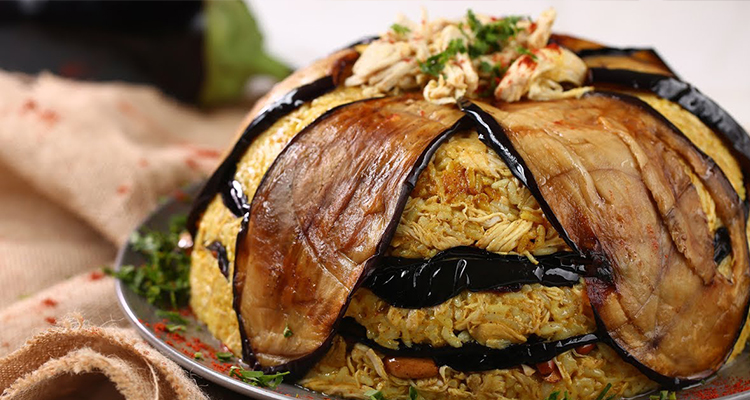
Today, we talk about maqluba—or the ‘upside-down’ dish eaten across the Levant. It consists of layers of rice, vegetables, and meat that are assembled in a pot and braised until the meat becomes fragrant and juicy. Then, the pot is flipped upside down onto a larger tray, revealing the beauty of the layered ingredients.
Maqluba is so deeply rooted in Levantine cuisine that variations can be found across the region. In Syria, for example, the dish is often prepared with minced beef. However, at its origins, maqluba is Palestinian. It was also known as the ‘dish of victory’ when Saladin, the sultan of Egypt and Syria, conquered Jerusalem in 1187. It is widely believed that Saladin himself renamed the dish, which was previously called ‘baitenjaniyeh’—literally meaning aubergine.
What makes maqluba so delicious is its main ingredient—aubergines—which pair perfectly with rice and meat. Believe it or not, the first maqlubas were made with bulgur, as rice was once reserved exclusively for the wealthy. Over time, as trade routes expanded, rice became more accessible to the common people.
Today, the ‘upside-down’ dish has also become a symbol of resistance for millions of Palestinians who have been forced to leave their homes and continue to struggle for the survival of their cultural identity.
Image credits: Nessma Cuisine





 The Fellow's Table

Leave a comment