
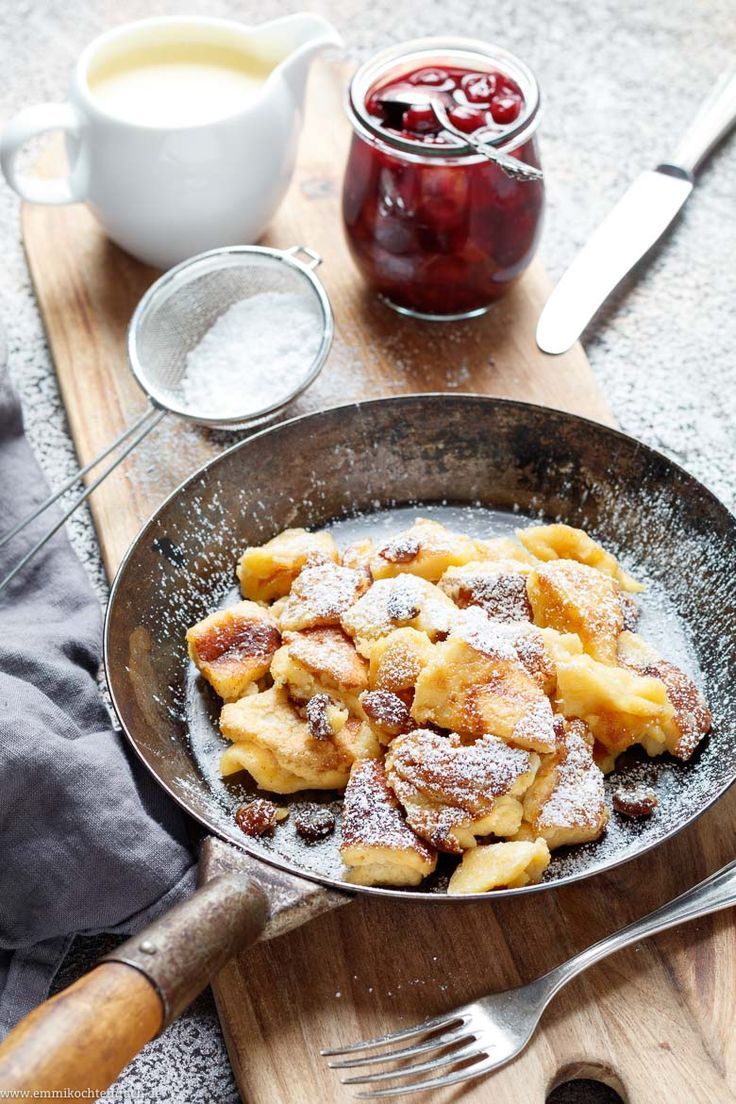
Kaiserschmarrn was, by far, my first encounter with Austrian cuisine. When a co-worker served me the fluffy, messily shaped pastry dish, I had little to no expectations in terms of taste.
Baked in a pan, the flavorful Kaiserschmarrn resembles a ‘fat pancake’ that is cut into smaller pieces before being warmly served with raisins and powdered sugar. Serving it hot is particularly important, as the dish loses its smooth texture once it cools down.
There are many legends about the origins of Kaiserschmarrn. Despite the fine line between myth and reality, it is generally agreed that the dish was first prepared for the Austrian Emperor Franz Joseph I (1830–1916).
For centuries, Schmarren has been known as a simple rural dish. In its original form, it resembled a hearty Sterz, considered “poor people’s food” for farmers, cottagers, shepherds, and alpine herdsmen. Milk, eggs, flour, and animal fat were readily available on farms, and a variety of pan-fried dishes were prepared using these staple ingredients.
A popular legend says that the Emperor was served a Holzfällerschmarrn during a hunting expedition in the Salzkammergut mountains. In his honour, the dish was refined with milk, raisins, and eggs, and later became known as Kaiserschmarrn.
In another story, the palace chef accidentally ‘invented’ Kaiserschmarrn while experimenting with misshapen pancakes. Since Franz Joseph I preferred Palatschinken (Austrian pancakes) for dessert, the new dish was returned to the kitchen with the remark, “So ein Schmarrn ist des Kaisers nicht wert!”, which translates as, “Such nonsense isn’t worthy of the Emperor!”
Whether His Majesty fell in love with or despised Kaiserschmarrn, one thing is certain: the sweet dish that bears his name has made its way into Austrian cuisine and become a flagship of its culinary tradition.
Image credits: Maras Wunderland


 The Fellow's Table
Leave a comment