
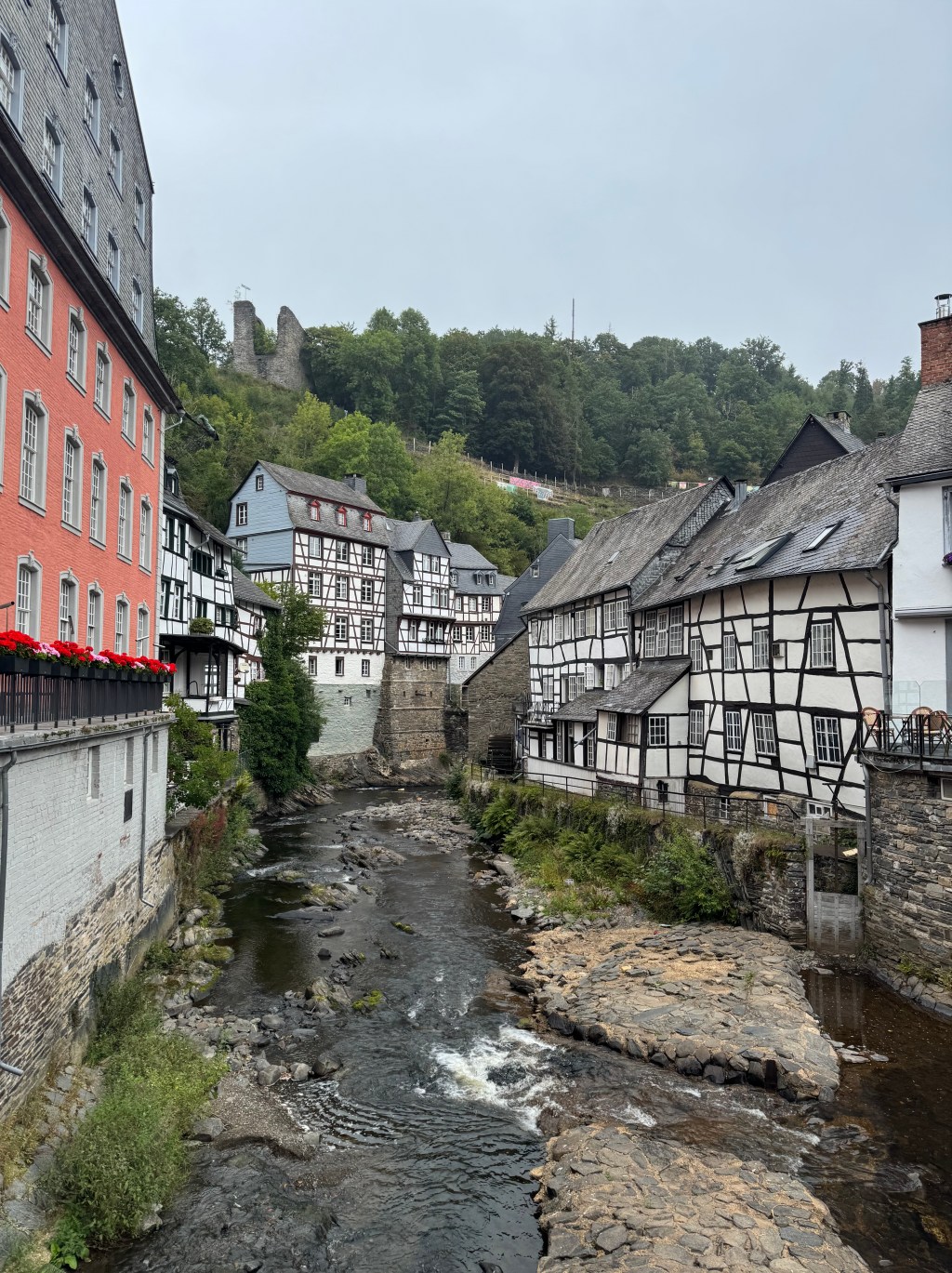
Little is known about this tiny human settlement nestled in the Rur Valley, just one hour away from Aachen. Strangely, Monschau is not a famous tourist destination on Germany’s map, although it deserves a place alongside Neuschwanstein Castle or Rothenburg ob der Tauber.
Hidden from the rest of the world by its slightly elevated location and dense forests, Monschau has long been considered a living museum of medieval urban design—one that escaped major destruction during World War II and preserved its original architecture.
Obviously, Monschau is not designed for cars. You might want to park your vehicle at one of the four existing parking lots and explore the surroundings on foot. The town is famous for its half-timbered houses, cobbled lanes, and slate-clad roofs that have remained nearly unchanged for 300 years. For many, the picturesque townscape of Monschau resembles Harry Potter’s Hogsmeade village.
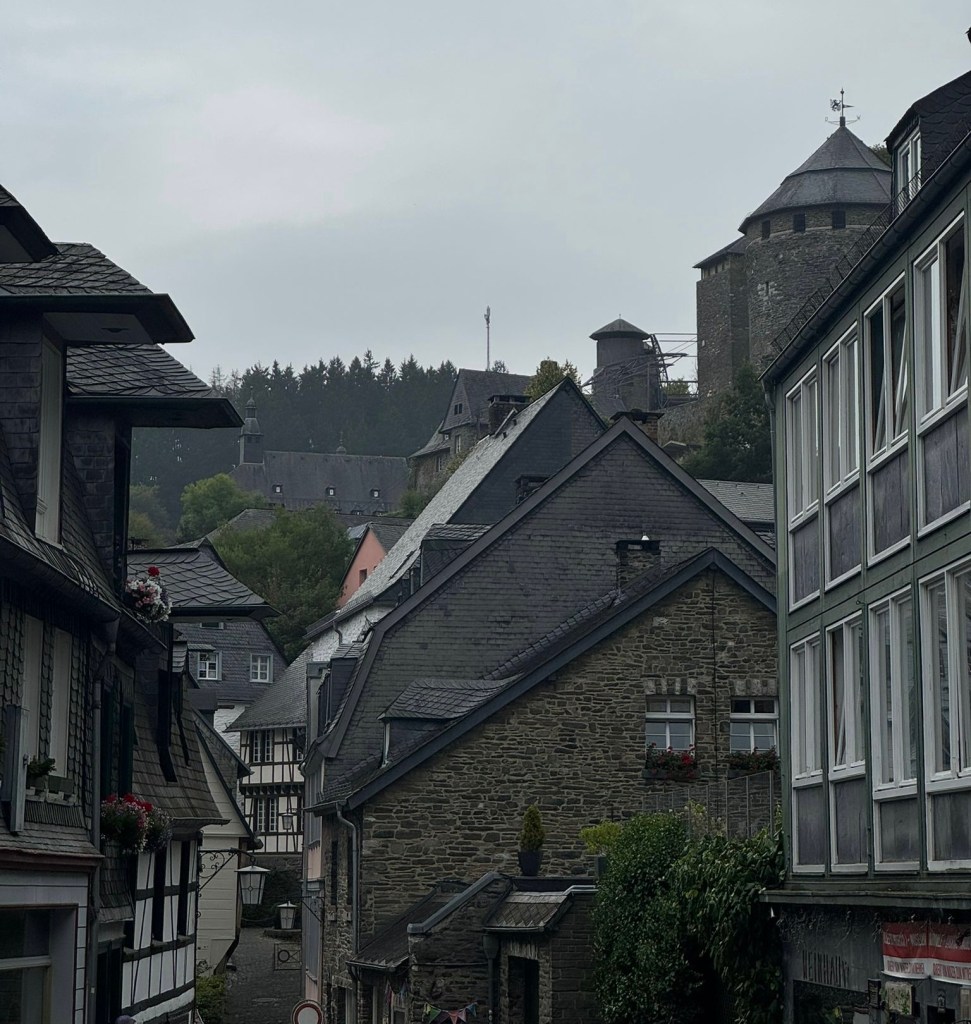
The first recorded mention of Monschau dates to 1198 under the Latin name Mons loci. Decisive for the town’s development was the construction of Monschau Castle three years earlier. Now, think about it: at the dawn of its history, this town was contemporary with the Crusades and Saladin!
During the Thirty Years’ War, many Calvinist and Lutheran families from the Netherlands and neighbouring regions fled to Monschau to escape persecution. In fact, this is when Monschau’s golden age began, with cloth and wool production flourishing in the region.
Little is spoken about Monschau’s leper colony. During the Middle Ages, leprosy—a feared and stigmatized disease—led to the establishment of isolated care houses in many European towns. Historical records suggest that it existed outside the medieval town walls from at least the 14th or 15th century until leprosy gradually disappeared from the region in the 18th century.
Monschau had been on our travel list for a year before my husband and I finally embarked on our journey this summer. The town greeted us with 10 degrees Celsius and sleet in mid-August, but otherwise, it was a fantastic experience—and surely not the last one in this surreal corner of Germany. Just imagine spending your Christmas vacation here!


 The Fellow's Table
Leave a comment