
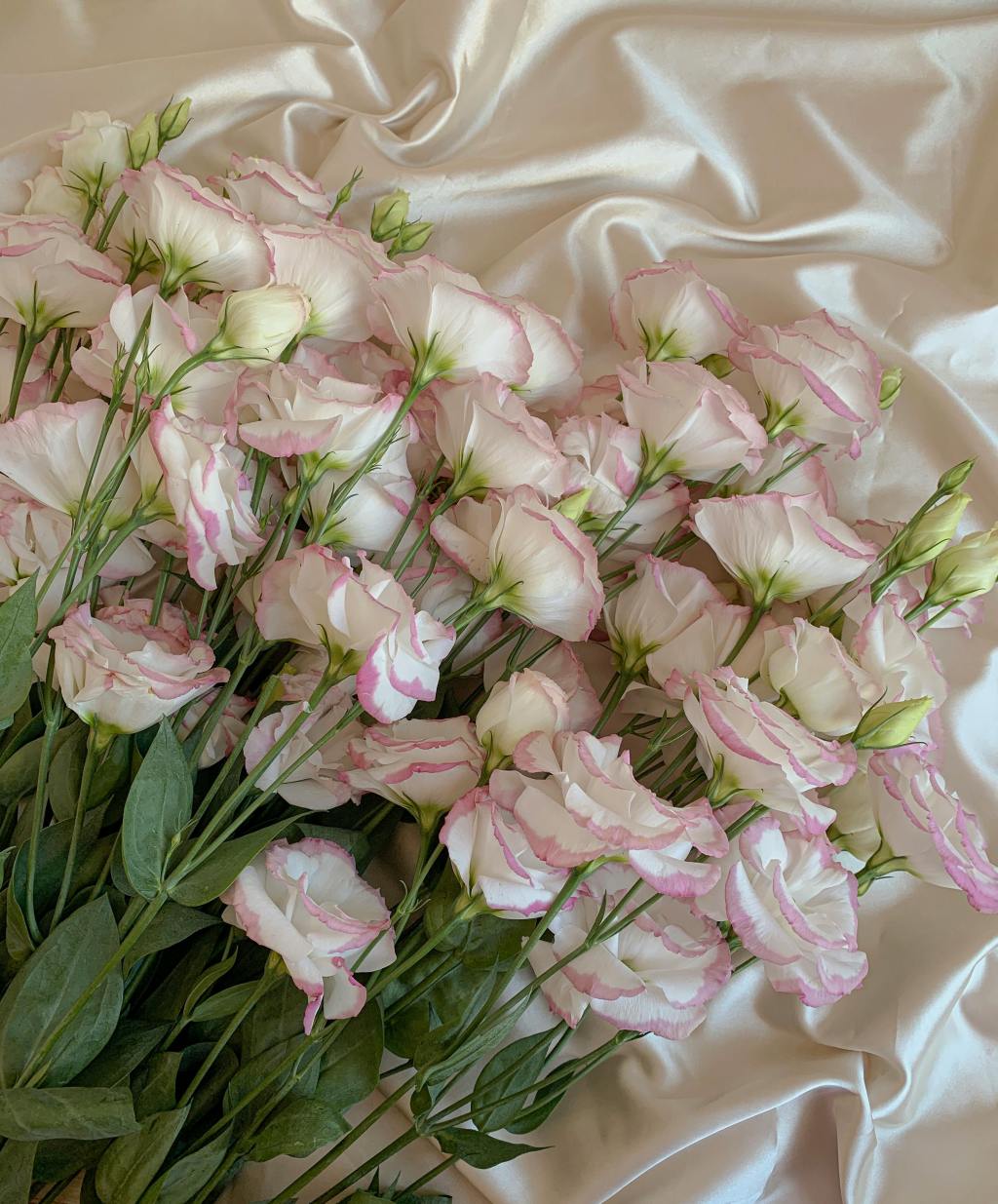
In the house I grew up in, and in those I visited, real flowers were an unexpected presence. Perhaps it was because we preferred tending to the ones in our garden—watering them, preserving their beauty throughout the blooming season—rather than plucking them and placing them temporarily in a vase. But then why did we choose eccentric artificial bouquets or dried arrangements for our homes? Some cultures handle their emotions with ease; others prefer to act as if they don’t exist—just like mine.
Flowers tell us more about who we are than we might realize—especially in how we deal with our emotions. Their meaning is subtle yet powerful: flowers evoke positive feelings and create a subconscious sense of safety. Studies show that people who receive flowers tend to become more emotionally positive. When exposed to flowers, both men and women are more likely to smile, maintain a social rather than impersonal distance, and initiate conversation.
Certainly, flowers bring a touch of gentleness and tranquility to our rather chaotic lives. They represent a brief, stubborn peace between our well-being and the constant restlessness we place ourselves in through the roles we have taken on and must fulfill. They are the quiet corners of our rooms that make us smile involuntarily and take a deeper breath. But how aware are we of their unspoken language?
To begin with, recall the last time you were in the presence of flowers. Was it in a public garden or in your home? Did you receive them, or did you buy them yourself? What was the occasion? What kind of flowers were they? And what color?
To me, flowers are the brightest spot in a room—the place where I like to rest my eyes a little longer (perhaps also because myopia has sharpened my appreciation for color). Many times in my life, I have found myself unable to bring color—into my own life and into the lives of those around me. So perhaps flowers are an unspoken language that fills a missing gap, an emotional void. I remember the pure joy of the women in my family when receiving elegant bouquets of blush eustomas, white gypsophila, and pink carnations. I would buy them villas in Saint-Tropez if I could. For now, I give them flowers.
Any woman who rejects her affinity for flowers is either lying or in denial. If not men, women are often the more emotional ones, and are consistently preoccupied with the aesthetics of life. Men, however, have their own reasons for giving flowers.
In my opinion, men’s gestures with flowers can be broadly divided into three groups. First, there are the “steal-your-heart” flowers—usually roses. Second, there are the “to-the-great-women-of-my-life” arrangements, meant for mothers, aunts, and grandmothers. Finally, there are the “forgive-me” bouquets, offered to their life partner after stepping on a rake. The latter either end up discarded (though not without drama) or proudly displayed in a place of honor in the living room.
Some time ago, my husband and I quarreled on the way to a shopping center. Afterwards, he clumsily tried to lift my miserable mood. Realizing it wasn’t working, he left me for a few minutes in the company of a hot cup of black tea and a generous sesame bun, only to return with a bouquet of supermarket yellow roses. The next moment, he was forgiven.
Remember that flowers should not be reserved only for special occasions, as this makes them feel distant or out of reach in everyday life. If you feel you’re lacking color at some point, buy yourself some flowers—or simply observe them in nature. It will do you more good than you might realize.
Image credits: solod_sha Content creator


 The Fellow's Table
Leave a comment